As the founder of Next Energy Consumer and someone who has worked on energy poverty for over 15 years, I know how deeply the way we live impacts our ability to tackle the climate crisis. With a new year upon us and a new EU Commissioner for Energy and Housing stepping into office, this is the perfect moment to push for bolder action.
The housing and climate crises are deeply intertwined, and we can no longer afford to treat them as separate issues. As national governments begin drafting National Building Renovation Plans in the lead-up to 2025, the decisions made now will determine whether millions of Europeans can access affordable, efficient, and sustainable homes.
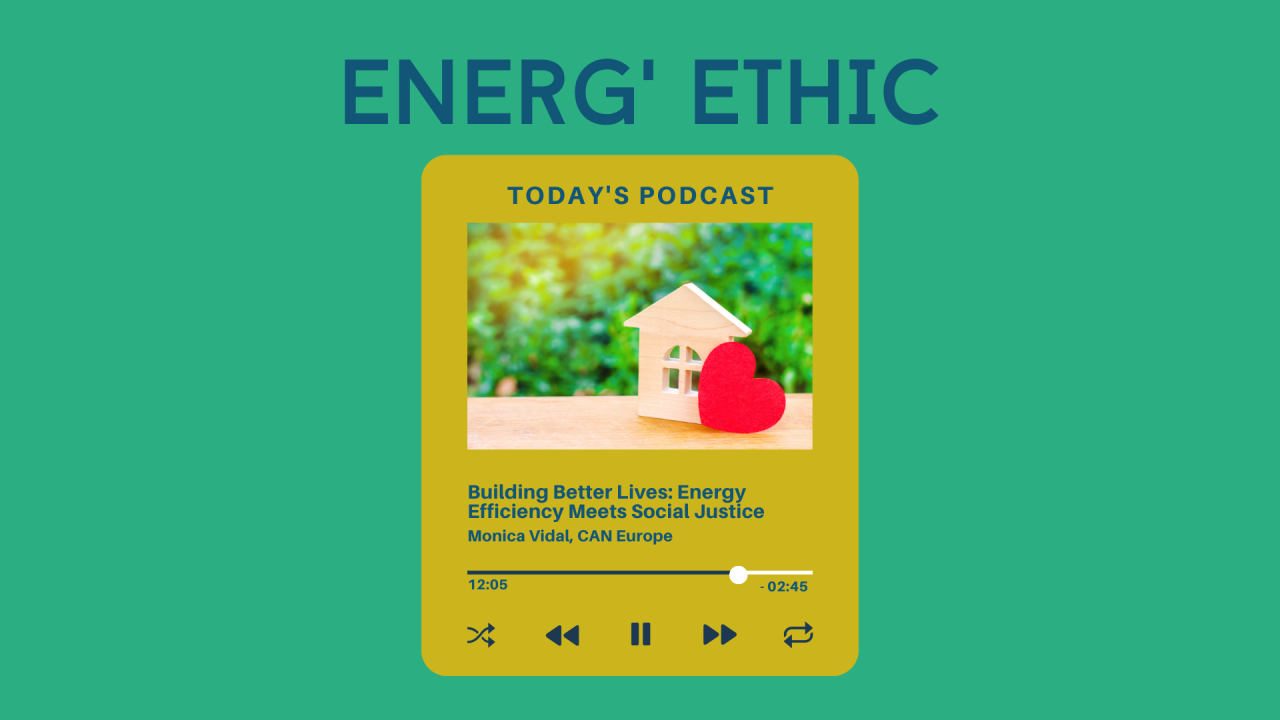
That is why this latest episode of the Energ’ Ethic Podcast resonates so strongly. Mónica Vidal , leader of Climate Action Network (CAN) Europe ’s Build Better Lives campaign, shares her perspective on how energy efficiency, affordability, and collaboration are the keys to solving both crises.
The Crisis We Cannot Ignore
Buildings in Europe are responsible for 40% of energy consumption, and 70% of them are inefficient. Heating these buildings often relies on fossil fuels, leaving 42 million Europeans in energy poverty.
We urgently need solutions that address both the climate and housing crises, including:
-
Retrofitting inefficient homes to lower energy use and costs.
-
Repurposing vacant spaces into affordable housing.
As Monica puts it, “It’s not just about climate action—it’s about improving lives.”
Collaboration is the Key
Monica’s work in the Build Better Lives campaign proves the power of partnership. With 92 organisations from housing, social justice, and environmental sectors, she is leading the charge for socially just, ambitious building policies.
Her approach is one I deeply admire: collaboration over silos. These challenges are too big for any one sector to solve alone.
Energy Efficiency: A Right, Not a Luxury
Monica also highlights the everyday impact of energy-efficient appliances. While the Ecodesign Directive and energy labels have improved efficiency, affordability remains a barrier for many households.
Her advice? Focus on #sufficiency and make efficient products accessible to everyone. This echoes what I’ve seen in my own work—energy poverty won’t end without equitable access to the benefits of the transition.
What’s Next? Policy with Purpose
As the EU’s new Commissioner for Energy and Housing takes office, I hope to see:
-
Affordable, energy-efficient homes prioritised in policies.
-
Inclusive national renovation plans that involve those most affected by energy poverty and the housing crisis.
-
A narrative shift that links housing, energy, and social justice.
The decisions made in the first half of this year will shape the future of Europe’s homes. Monica’s work is a reminder that the energy transition is about more than just numbers—it’s about people.
Join the Conversation
Listen to this episode of Energ’Ethic on your favourite platform to hear Monica’s actionable insights.
What are your thoughts on the intersection of housing, energy, and social justice? Share your ideas with us and be part of the solution!
https://smartlink.ausha.co/energ-ethic-climate-justice-and-energy-transition/62-monica-vidal