Europe is about to decide what efficiency means next. The question is who the new version is written for.
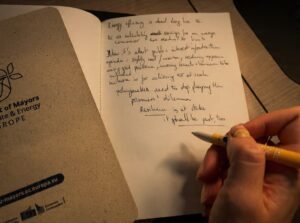
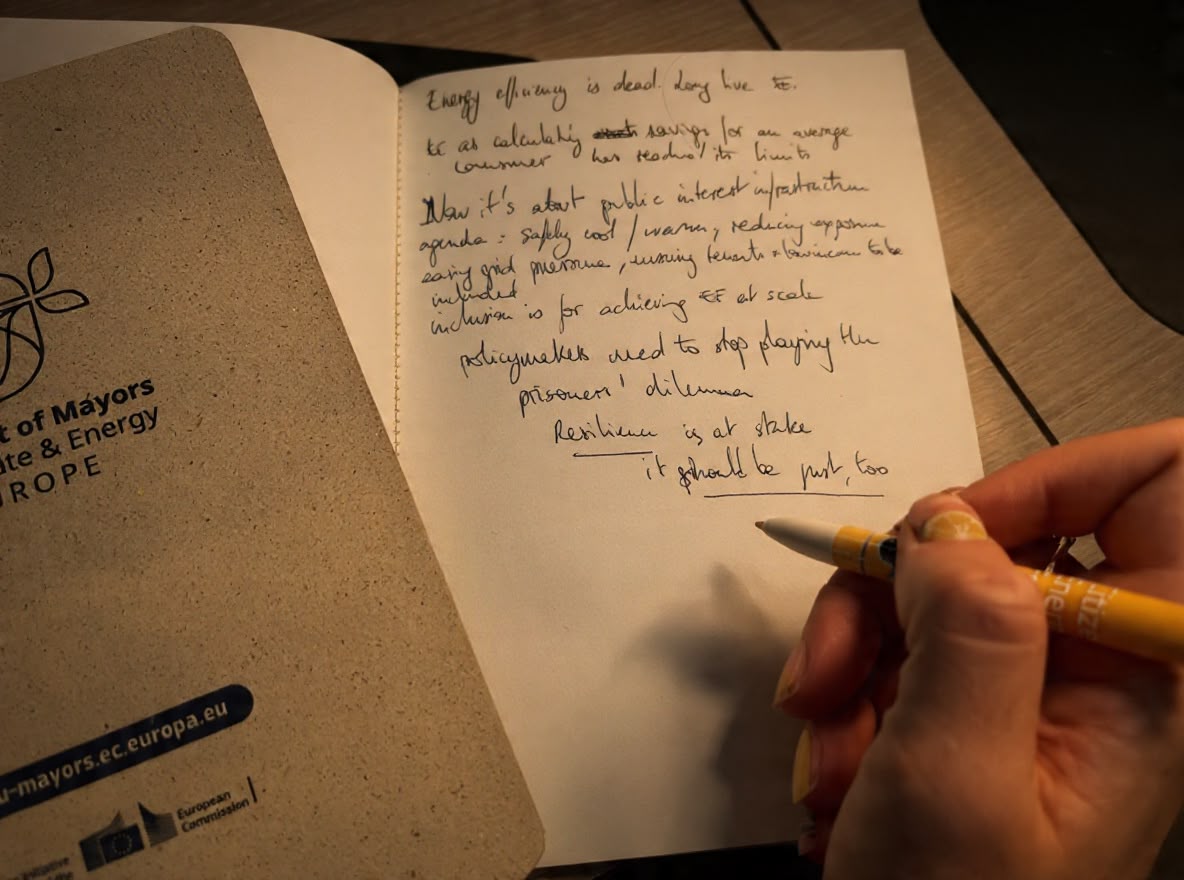
I woke up yesterday thinking: energy efficiency is dead, long live energy efficiency.
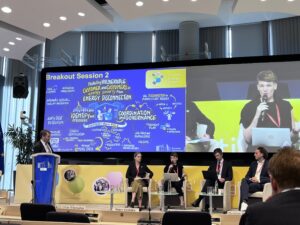
A few hours later, I said it on stage at European Energy Efficiency Day, in a workshop on reframing efficiency for the next generation.
Just before I spoke, another panellist made a useful observation. Efficiency still unifies people inside the Brussels bubble. Outside it, asking people to become efficient for efficiency’s sake has lost its force.
That is the symptom. This newsletter is about the cause.
The “average consumer” is gone
The efficiency that is dead is a calculation. It counts kilowatt-hours saved and assumes the savings flow automatically to an average consumer who, in practice, no longer exists.
It treats a building as a technical asset and a renovation as a compliance exercise. It measures aggregate savings without asking whose demand fell and whose needs were simply suppressed. It assumes the benefits reach residents, while split incentives, rent increases and insecure tenure decide otherwise.
It was designed for winter. And when bills rise, it reaches first for with temporary compensation that leaves the dwelling, and the household’s exposure, exactly as they were.
The cost of that model is now measurable. Household electricity prices across the EU remain well above their pre-crisis level. This year’s oil-and-gas shock added further pressure: in Germany, energy prices were 15% higher in September than a year earlier. A Greenpeace analysis published this week shows who is shielded. A model German household with a heat pump, an electric car, rooftop solar and a battery saw its living costs rise by 1.5% between January and August, against 2.5% for the official basket. The calculation excludes the capital cost of the equipment. For tenants and lower-income households, who face the greatest barriers to accessing it, this is the essential caveat.
Summer exposes the model at its weakest point. A household can look efficient on paper because its energy use is low, while the people inside endure unsafe heat because the cooling they need is unaffordable, unavailable, or outside their control.
Low energy use is not proof of efficiency when it reflects unmet cooling need. The test is whether people can stay safely cool while using little energy. A well-designed home can stay safe with little energy. A home where people ration the cooling they need cannot.
Commission President Ursula von der Leyen said that more than 35,000 additional deaths occurred during this summer’s heatwaves. We have probably lived through the coolest summer of the rest of our lives. Peak demand is moving from winter to summer, and the efficiency debate has barely registered it.
The prisoner’s dilemma played with public trust
Policymakers often behave as though climate ambition, efficiency, affordability, health, competitiveness, security, inclusion and even beauty were competing objectives. Each ministry, level of government and market actor protects its own momentum, short-term budget, mandate and political risk. Collectively, they produce higher bills, slower decarbonisation, deeper exclusion and a less resilient energy system.
The moves are familiar. Finance ministries prefer bill support to capital-intensive renovation. Energy ministries prioritise supply and grids, and leave housing quality to another portfolio. Social ministries protect households after the bill arrives, without the mandate to fix the home. Local authorities hesitate when the benefits of acting land in someone else’s budget. Households with low incomes or insecure tenure defer investment, rationally. Each choice is rational in isolation. Together, they leave everyone worse off.
Policymakers have one job here: keeping bills affordable over time. Compensation without strategic choices fails that job, and we all end up paying for it.
The dilemma runs between levels of government too. At the Covenant of Mayors Ceremony, mayors warned that funding routed through national capitals would reduce cities to a box ticked during consultation. Wopke Hoekstra, the Climate Commissioner agreed that responsibility, and the means to act on it, belong at the lowest possible level. He also put a figure on the cost of standing still: this calendar year, Europeans paid “100 billion more to get the exact same amount of molecules” of oil and gas. And he conceded that even if every level gets it almost completely right, Europe is likely to do too little, too slowly.
EU law has already rejected the trade-off. The recast Energy Efficiency Directive gives energy efficiency first legal standing: Member States must consider it in all relevant policy and major investment decisions, inside and outside the energy sector. They must prioritise vulnerable customers, people in energy poverty and social housing residents, and achieve part of their energy savings among them. The law is written. The dilemma persists in its application.
Earlier at the same ceremony, Teresa Ribera, the Executive Vice-President for the clean transition asked mayors to answer climate disinformation in the open, and named trust as the response.
Every round of the dilemma spends some of that trust. It depreciates like any infrastructure nobody maintains.
Just resilience is what efficiency was for all along
What survives is efficiency as public-interest infrastructure.
Keeping people safely cool in summer and warm in winter. Reducing their exposure to price shocks and to climate risks that now arrive all at once. Easing pressure on the grid. Making sure tenants and low-income households are included, because inclusion is the core of efficiency, and the part we have overlooked the longest. We need more efficiency because we need to share the energy we have.
When that story is missing, another one fills the gap. Efficiency is costly, the counter-narrative says, and a waste of time. Adoption shows how fragile the ground is. European heat pump sales fell for two years, by close to a quarter in 2024, before recovering in 2025, and the industry still names policy uncertainty and reduced incentives as brakes.
The next generation is drawing its own conclusions. Students in France, Belgium, Spain and Albania have taken to the streets over schools, fees, housing and jobs, and an international youth strike is called for 20 November. Across seven European countries, 57% of 16 to 26 year olds say they are optimistic about their own future, against 70% in 2017. Energy is absent from their list of grievances. For a field that says it is building their future, that silence is telling.
The real test
Two briefs I will publish in the coming weeks follow this thread into places policy rarely looks.
One asks what a right to energy would change if it shaped electrification from the design stage, preventing deprivation by design.
The other follows the money when local networks change: when gas grids shrink, when electricity grids expand for new loads, and when a household’s exposure depends on its tenure, its heating system and its street.
Markets will price this divide before policy names it. Households that electrified early are already insulated from fossil price shocks. Those that could not are the most receptive audience for the claim that efficiency is a waste of their time.
Before the end of the year, the Commission will present its post-2030 energy efficiency framework, and its resilience plan is due within weeks. Together, they will show which efficiency Europe chooses to keep alive: the calculation, or the resilience.
The answer will be visible in one detail: is the household that cannot afford to build its own resilience counted from the start?
Energy efficiency is dead as a calculation for an average consumer who no longer exists.
Long live energy efficiency: as just, fair, and inclusive resilience.
Where do you still see efficiency sold as a calculation, and who pays for the gap it leaves? Reply and tell me.
P.S. I am shaping my 2027 work around just resilience: how energy, infrastructures, housing, and adaptation policy share the costs of a hotter, more volatile decade. If your organisation is building in that space, I would welcome the conversation.
Forthcoming: Access to energy in times of transition, for the Green European Foundation and Heinrich-Böll-Stiftung EU Energy Knowledge Community. Inclusive local energy infrastructure planning, for the Heinrich-Böll-Stiftung EU.
References. Eurostat, household electricity prices, second half of 2025 (primary release to be linked). Clean Energy Wire, Electrification shields households from oil and gas-related inflation pressure (12 October 2026), citing Destatis on September energy prices. Greenpeace, analysis on the oil price shock and inflation. AP, coverage of the State of the Union (16 September 2026). European Commission, Energy Efficiency Directive. IEA, Global Energy Review 2026: heat pumps. TUI Stiftung, Young Europe 2026. 5th European Energy Efficiency Day and EU Covenant of Mayors Ceremony 2026, 15 October 2026.