Europe’s proposed Climate Resilience Law lets those who adopt each plan define the risk they find acceptable. The households with the least room to adapt are the ones left holding it.
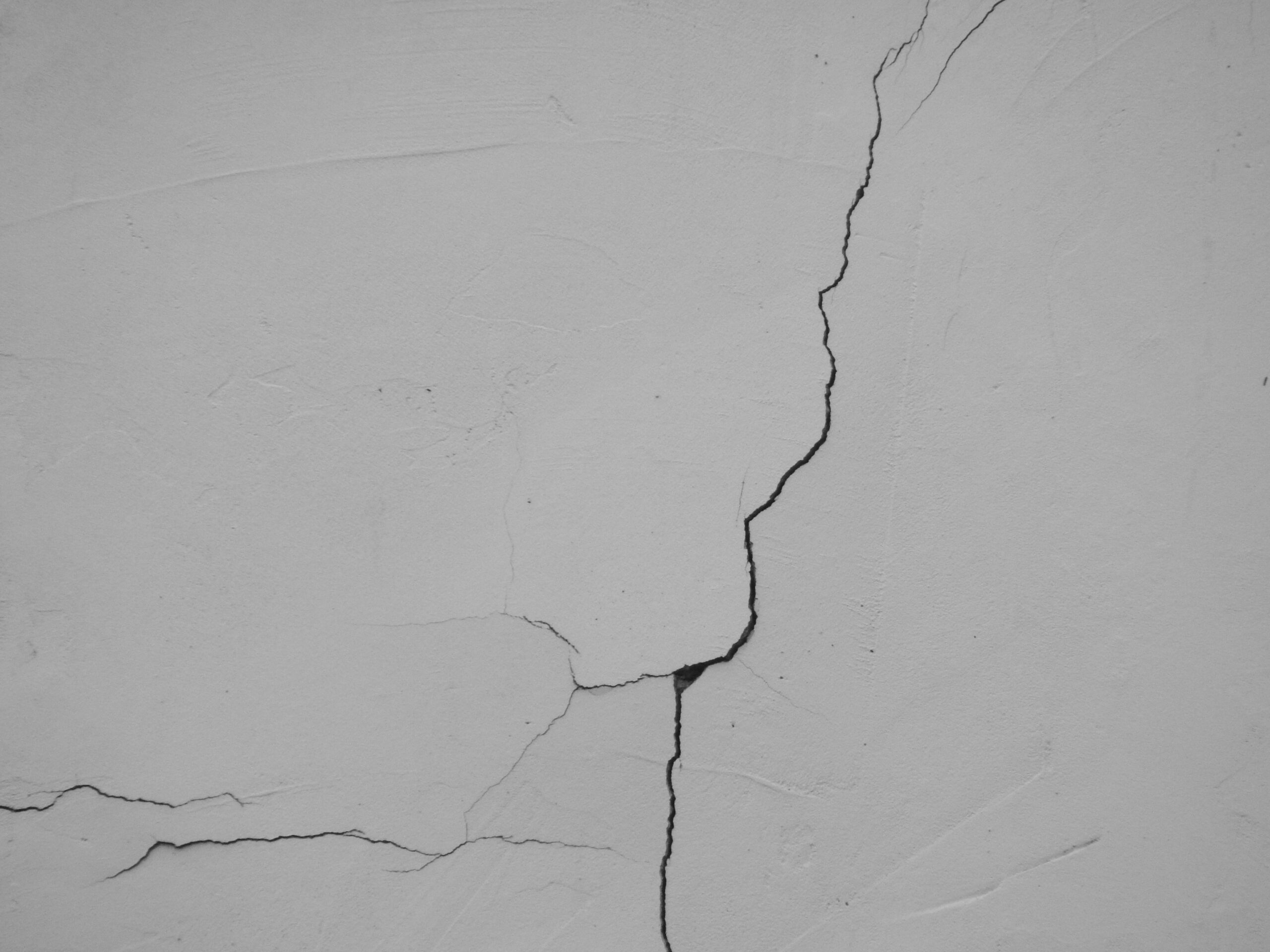
A crack has opened above her front door since the summer.
It runs across the façade of the small house she owns on the edge of Paris, the pavillon that is the pride of her working life. Her street sits in one of the heat islands that cover the inner suburbs. Her house was built long before anyone rated its energy performance, and every summer it holds the heat through the night. Her home insurance includes natural catastrophe cover, as every French home policy must. Whether it pays depends on a ministerial order. This month, her children march with the protests, tired of overheated classrooms and absent teachers.
The uninsured and the unadapted are the same households
Her household’s needs are split across ministries. Housing sees an old house, energy sees an unpaid bill, finance sees a missing policy, health sees a summer statistic. None of them sees her whole. Across much of Europe, the households with the least means to adapt are also the households with the least insurance, and each gap deepens the other.
Across the EU, only 17% of people hold cover for property damage caused by natural catastrophes. Among low-income consumers, the share fell from around 14% in 2022 to 8%. In Italy, 5.9% of dwellings were insured against natural catastrophes in early 2024. France is the exception. Natural catastrophe cover comes bundled with home insurance, and only about 2.5% of people lived in an uninsured home in 2024. There, the gap opens after the claim.
Her crack belongs to a hazard that grows with every dry summer. Over 60% of French individual houses, some 12.1 million homes, stand on clay soils with medium or high exposure to drought movement. Compensation depends on an administrative recognition that only about half of applying communes obtain, and roughly half of the claims filed in recognised areas end without the repairs being paid.
Heat reaches her a second time, indoors. In 2025, one in two French households said they had suffered from excess heat at home for at least 24 hours, and 64% of the recipients of the energy voucher. Across the EU, 26% of households lived in a dwelling that was not comfortably cool in 2023, and nearly 35% in the lowest income group. In August 2003, excess mortality in Seine-Saint-Denis reached 160%. This summer, an estimated 50,391 people died from heat in 854 European cities alone, the highest toll in the 26 years the researchers analysed. Nearly two in three of those deaths would not have happened without climate change.
Every instrument counts on a budget that stretches
Every instrument assumes her budget can stretch. It cannot, and fossil fuel dependence is wearing down her margin, along with the margin of the state behind her.
Yesterday’s proposal for a European Climate Resilience Law defines just resilience as ensuring that people in vulnerable situations are “taken into account”. Each national plan must take them into consideration, and the accompanying Communication announces a European Heatwave Plan and a common method for assessing distributional impacts. Member States must adopt their first national strategic plans on climate resilience by the end of 2030, and pursue them while taking into account available financial resources. The decision-maker adopting each plan sets the tolerable level of residual risk, taking into account financial, technical and political constraints. Member States must encourage public authorities to take the reference warming trajectory into account when they budget and plan.
The proposal’s recitals name sex and age among the grounds on which plans should prevent discrimination. Its four Union-level indicators count lives lost, economic losses, the share of losses left uninsured, and fiscal costs, broken down at most by Member State and policy area. None is broken down by age, sex, income or tenure. Statistics on deaths and economic losses attributable to climate change are due by the end of 2030. Until then, Europe keeps counting heat deaths country by country. The Commission’s own toll for this summer covers the seven countries that reported data, and Italy is not among them.
The proposal also requires that the public be given early and effective opportunities to take part in national plans, and that these be inclusive and accessible. To be heard in such a process, a person needs the knowledge, the network, the time, and someone listening who is willing and able to act. Without them, meetings are captured by the loudest voices, and residents stop coming. The level of risk a plan calls tolerable is set in a room she has stopped entering.
Then, her insurance. A new Climate Insurance Alliance is due to deliver its first measures on uptake, prevention and capacity by the end of 2027, and most of its levers presume a household able to buy a policy. The dashboard used to measure Europe’s insurance gap tracks five perils: earthquake, flood, wildfire, coastal flood and windstorm. Heat is absent. Moody’s estimated that the 2025 heatwaves cost Europe €43 billion in lost output, against about €500 million in insured payouts. Heat costs her sleep, health, and money, and no insurance policy records any of it as a loss.
And again, her bill. Tomorrow, energy ministers debate network charges built on locational and time-of-use price signals. In a randomised summer trial in the south-western United States, time-of-use rates raised bills disproportionately for elderly and disabled households and predicted worse health outcomes for disabled households. She cools her house when it is hottest.
The network charges proposal holds a second answer. It would require Member States to tax electricity no more heavily than gas, and many of them consider that such a rule requires unanimity. For a household like hers, producing part of her own electricity from her roof could shield some of her bill from price signals she cannot follow. That shield works only when it is affordable to install and paired with electricity that costs less than the gas it replaces. France moved the other way this year. Since 5 June 2026, new rooftop installations no longer receive the self-consumption premium, and the price paid for surplus power has been cut more than tenfold. Under the draft 2027 budget, a very low-income household installing a heat pump would rely on energy savings certificates alone, losing up to €5,000 of state support. The local programmes that find and accompany households like hers, such as SLIME+, are funded by the same certificates until the end of 2027. The same certificates are now a campaign target: several presidential candidates promise to abolish them as a hidden tax. Their future is uncertain.
Her country has paid this bill before. In 2018, a carbon tax rise asked households with no alternative to change how they lived. Fuel absorbed 9.2% of income for the poorest fifth of households and 3.2% for the richest fifth. Within weeks, the anger moved from the price at the pump to the institutions that had set it.
The state behind her has less room too. This year, 25 Member States spent €17.9 billion to cushion energy prices, more than two-thirds of it untargeted, while their borrowing costs rose substantially. In May, the IMF estimated that the shock would cost the average EU household about €375 this year. Averages are where she disappears.
Tolerable risk has an address
When household and public margins are thin at the same moment, the risk a plan calls tolerable settles in the household with no means to adapt. It settles there quietly, in a crack that widens each summer, a bedroom that never cools, a claim that is refused.
Markets will register this before the plans do. The German Insurance Association has warned that property premiums could double within a decade as climate-driven claims rise. For a household like hers, the house that was her main asset becomes her main exposure, and the households least able to adapt hold the homes most exposed to losing value.
Politics follows the same route. In 2018, people left outside the calculation forced their way back into it. This autumn, her children’s generation is asking for schools that work and a cost of living it can carry.
The proposal now uses the word tolerable. Every plan written between now and 2030 will have to say to whom.
Just resilience, as I understand it, is the shared capacity to withstand and recover from climate and energy shocks, built into public infrastructure and social policy, so that no household has to face them on its own means alone. For the person carrying the risk, it has to feel like a right.
The proposal now names who is at risk. The next test is whether someone capable of acting reaches her before the next heatwave, and whether help arrives without her having to beg for it. A resilience agenda that protects assets and leaves people exposed will lose the consent it depends on. Resilience will be just, or it will not happen.
If you draft or review one of those plans, I would like to know how your team decides what is tolerable. Reply and tell me.
The household described in this edition is an illustration, assembled from the data cited below. Any resemblance to a specific person is unintended.
References. European Commission, COM(2026) 730, proposed European Climate Resilience Law, 27 October 2026, Articles 2(6), 2(7), 4(2), 7 and 10, recital 11, Annex V. European Commission, COM(2026) 720, A resilient Europe for a changing climate, 27 October 2026, pages 2, 4 and 10, footnote 8, and page 11. Network charges and electricity taxation: Presidency note 14016/1/26 REV 1. Listen: Energ’Ethic, Urszula Papajak, on who gets heard when dialogue breaks down. Heat deaths 2026: The Guardian, 23 October 2026, reporting Imperial College London research accepted in Nature Health. EIOPA, speech by Petra Hielkema, Insurance protection gaps in a changing climate, 16 April 2026. ECB and EIOPA, Towards a European system for natural catastrophe risk management, and summary by Hogan Lovells. EIOPA, Dashboard on insurance protection gap, technical description. Italian dwellings: Risks (MDPI), citing ANIA. Heat losses: Moody’s, reported by Reuters via Business Recorder. Clay soils: Banque des Territoires, Sénat report on the CatNat regime, MoneyVox citing CCR. French home insurance: Meilleurtaux, citing France Assureurs. Heat at home: Médiateur national de l’énergie, baromètre énergie-info 2025, ONPE, JRC, Addressing residential cooling demand and summer energy poverty in the EU (2026). Heat mortality 2003: Inserm. Time-of-use tariffs: White and Sintov, Nature Energy (2019). 2018: OFCE, Université de Montpellier. Public spending 2026: Commission note, reported by Reuters. French self-consumption premium: Les Énergies Renouvelables. Draft 2027 budget and heat pumps: Selectra. SLIME+: Ministry, catalogue of CEE programmes, August 2026. CEE under political pressure: Actu-Environnement, 27 October 2026. Protests: The Parliament Magazine, 26 October 2026. Household average: IMF.