I keep returning to a report I helped write: the Blueprint for Inclusive Energy Services, done with Consumers International, which started deliberately narrow, Italians aged 75 and over, in one market. What we found there is far from narrow.
The first thing that shifted for me was language. Consumers International is moving from “vulnerable consumer” to “energy hardship,” and further, to its flip side, “energy wellbeing,” a spectrum people move along rather than a fixed box. I think about this against the EU’s own “vulnerable consumer” and “energy poverty” definitions under the Electricity and Gas Directives: a label that grants protection can also be the reason someone never says they need it.
The second is about who a liberalised market actually serves. In the fieldwork, we surfaced a “loyalty premium,” people who stayed with a familiar supplier expecting it to be rewarded, and paid more for it instead. Italy has just completed its own retail liberalisation and ended regulated tariffs. This is precisely the mechanism regulators will need to watch for the consumers who cannot easily compare or switch.
The third is about where responsibility sits. The Blueprint’s ten solutions were built with suppliers at the table, not legislated at them, on the bet that suppliers hold the customer relationship and can move faster than policy cycles. I don’t think that bet is naive, but the conversation is honest about where it runs out, and regulation has to begin.
There is also a silent thread underneath all three: 16% of Italians are absorbing this as unpaid caregiving, disproportionately women over 45. That labour rarely shows up in energy-poverty statistics, though it may be where the policy gap is most visible.
This sits close to the summer energy poverty research I published with the European Commission last year, and to a question this podcast keeps circling back to: what a market built for an idealised, self-advocating consumer actually costs the people who don’t fit that description.
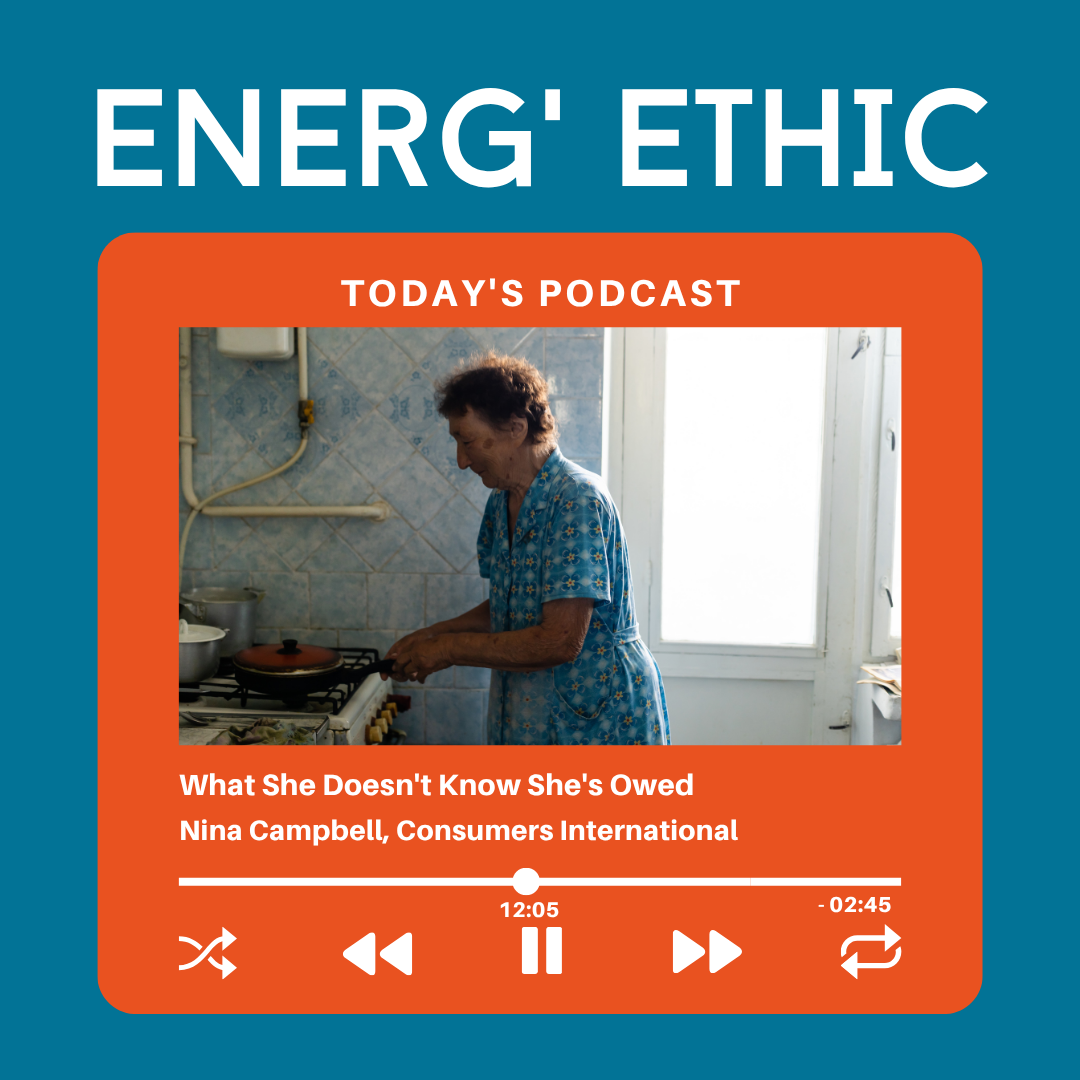
Listen or watch now to my conversation with Nina Campbell, Global Energy Lead at Consumers International: